
Why car shipping beats driving for long-distance student moves

If you're preparing for a long-distance student move in 2025, you're likely weighing your options: drive your car yourself or rely on professional long-distance car shipping. While initially assuming driving is cheaper, that assumption can backfire once all factors are considered. From financial savings to stress reduction, more students are realizing the true value of choosing a student car shipping solution.
Why are more students choosing to ship their cars?
In 2025, long-distance car shipping has quickly moved from a niche solution to a mainstream choice for college families. With students traveling farther than ever for education, traditional road trips are being replaced by smarter and safer logistics.
A shift in student mobility trends
With growing enrollment across out-of-state universities, student relocation patterns have changed. According to industry reports, over 35% of college-bound students move 500+ miles from home. That means more families are facing complex logistics. Long-distance student car transportation has emerged as a practical solution that aligns with modern needs.
Growing demand for convenience & safety
Driving for days through unfamiliar routes is no longer a rite of passage — it's a risk. Parents and students alike are prioritizing reliability, safety and time efficiency. Modern shipping carriers use GPS tracking, damage protection and dedicated delivery windows to simplify the move-in experience.

The true cost of driving to college
At first glance, driving to campus might seem like the cheapest option — just fill up the tank and go. But when you factor in the full picture, the reality is far more expensive. Before hitting the road, it’s important for students and families to understand the true financial and personal toll that self-driving often brings.
Fuel, food, hotels & road tolls
A multi-day drive isn't just about gas. Add meals, accommodation, tolls and parking — costs add up quickly. Even with fuel-efficient vehicles, families report spending $600–$1,200 on a cross-country trip.
Maintenance & post-trip repairs
Long drives accelerate wear and tear. Students often arrive at campus needing tire rotations, oil changes or even mechanical fixes. These expenses aren’t always budgeted but can’t be ignored.
Time off work or school to make the drive
A 2–4 day drive means time lost. Whether it’s a part-time job or summer classes, the opportunity cost of self-driving often outweighs the perceived savings.
Key benefits of shipping your car instead
When it comes to long-distance student moves, car shipping isn't just a luxury — it’s a strategic advantage. More families are discovering that professional vehicle transport offers convenience, peace of mind, and practical benefits that far outweigh the costs of driving.
Faster & easier move-in experience
Shipping means you or your student can fly directly to campus, skip roadside stress and focus on move-in priorities like dorm setup or orientation.
Reduced stress for students & families
Parents avoid the hassle of long drives and students arrive rested. Especially for first-year students, starting college with peace of mind is invaluable.
Safer option for long-distance travel
Road conditions, fatigue and accidents are real risks. With professional shipping, the vehicle travels securely while your student flies safely.

Cost comparison: shipping vs. driving in real numbers
Many families assume that driving a car cross-country is always the cheaper option — but real-world numbers tell a different story. In 2025, with rising gas prices and tighter travel schedules, it's more important than ever to compare the full picture before hitting the road.
Average price of cross-country shipping in 2025
The average cross-country student car shipping cost in 2025 ranges from $950 to $1,450, depending on several variables:
- distance: routes over 1,500 miles will naturally fall on the higher end;
- carrier type: open carriers are more affordable, while enclosed carriers (offering more protection) come at a premium;
- season: rates spike in August and early September due to back-to-school demand. Booking early or in off-peak months like May or October helps cut costs;
- pick-up/drop-off locations: deliveries to major metro areas tend to be cheaper than rural or remote destinations. In general, this cost covers full-service transport, including insurance and coordinated delivery “windows”.
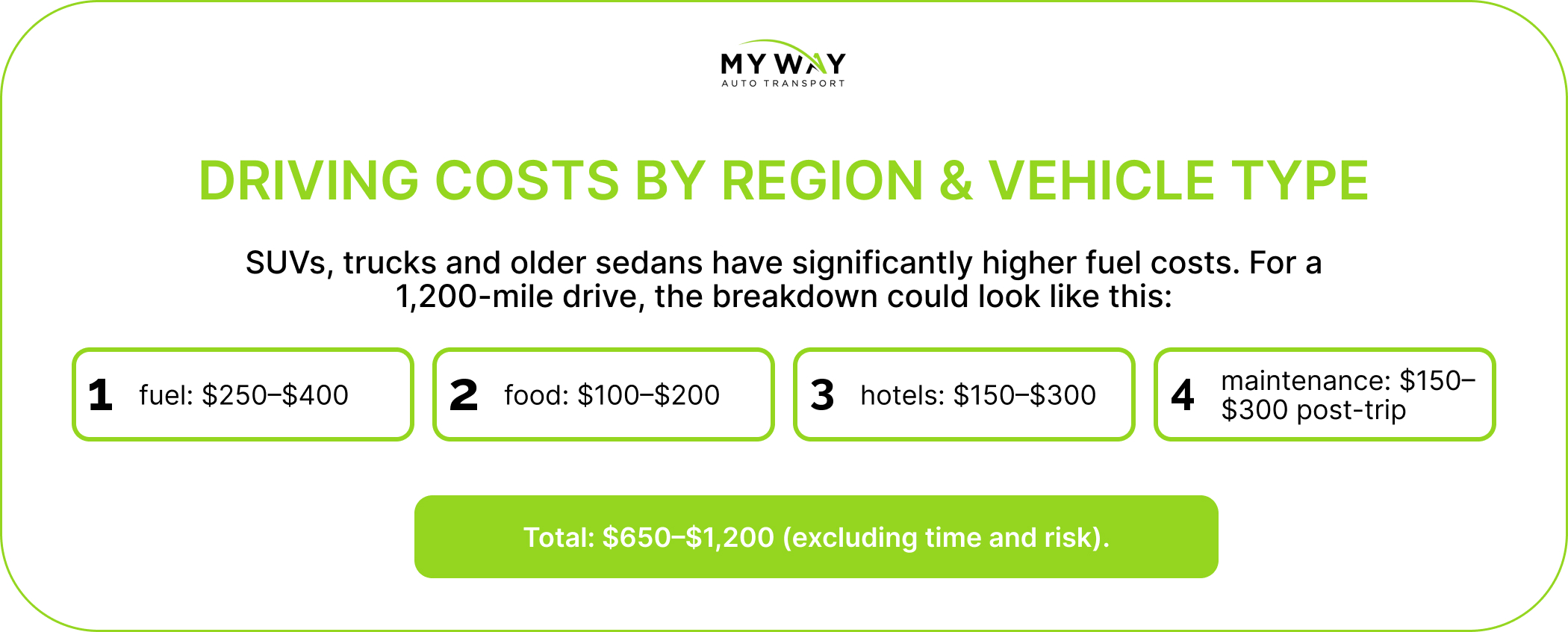
Driving costs by region & vehicle type
SUVs, trucks and older sedans have significantly higher fuel costs. For a 1,200-mile drive, the breakdown could look like this:
- fuel: $250–$400
- food: $100–$200
- hotels: $150–$300
- maintenance: $150–$300 post-trip
Total: $650–$1,200 (excluding time and risk).
When shipping becomes the budget-friendly choice
When all costs are included, shipping is often cheaper or comparable — and far more convenient. This makes it a smarter investment, especially for first-year students or solo travelers.
Additional factors to consider before hitting the road
Driving long distances to college isn’t just a financial decision — it’s a personal safety and logistics challenge. Before deciding to drive, it’s essential to weigh these factors against the peace of mind and reliability of professional long-distance student car transportation.
Weather, road conditions & safety risks
Late summer hurricanes, unpredictable storms or wildfires can delay or endanger travel. Student drivers may not have the experience to navigate such hazards.
Long travel times & student fatigue
Even confident drivers get tired after 8+ hours. Fatigue reduces reaction time and increases accident risk, especially during long solo drives.
Insurance coverage during transit vs self-drive
With professional shipping, coverage is built-in. Learn more about student car shipping insurance, including what’s included and how to ensure full protection. Remember that most standard policies don’t cover road trip incidents fully.
How to plan a cost-effective car shipment for college
Smart planning makes long-distance student car shipping more affordable and stress-free. Whether you're a parent organizing the move or a student handling logistics solo, a few proactive steps can save hundreds of dollars and avoid last-minute headaches.
Choosing a reputable carrier with student discounts
Always choose a licensed and insured car transportation company. Ask about student specials — some providers offer discounts of 10–15% for college relocation.

Booking at the right time to avoid peak rates
Avoid late summer rushes. Book at least 3–4 weeks in advance to lock in the best rates before campuses reopen.
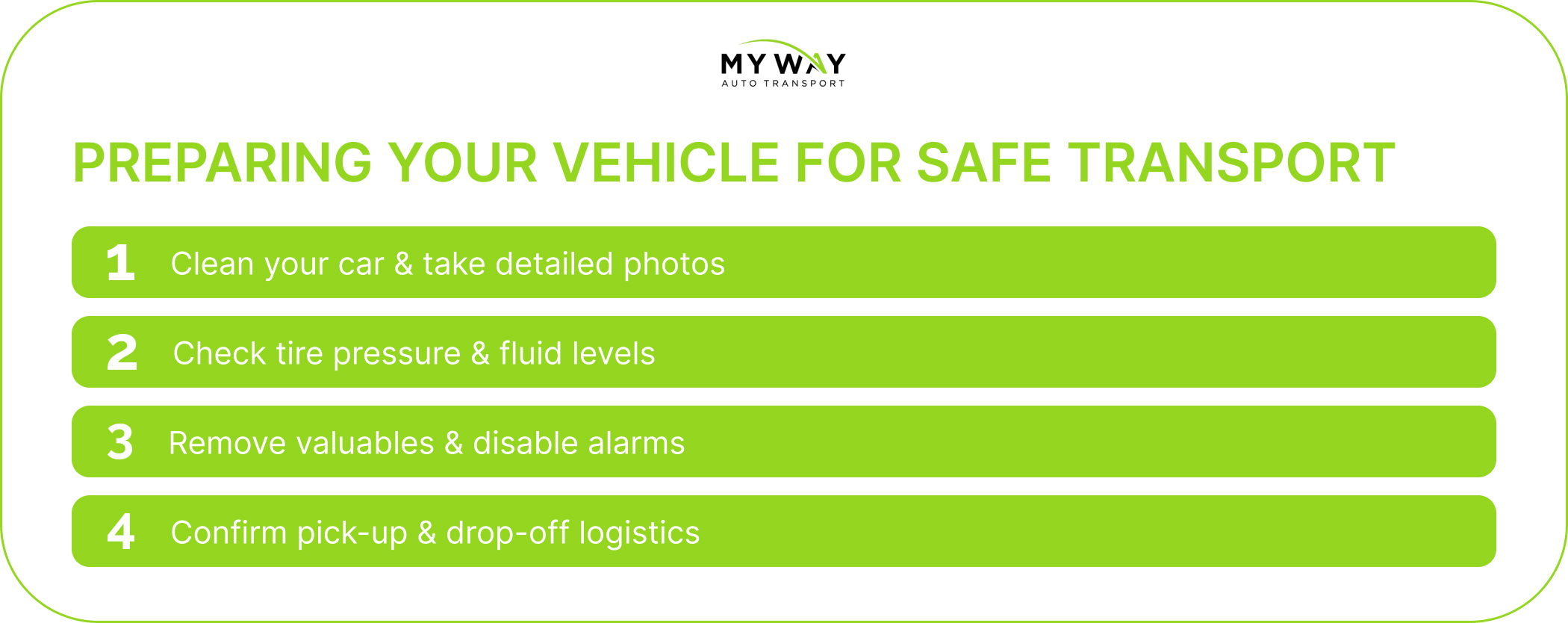
Preparing your vehicle for safe transport
- clean your car & take detailed photos
- check tire pressure & fluid levels
- remove valuables & disable alarms
- confirm pick-up & drop-off logistics
For a full guide, check our car transportation for students article.
Shipping is the smart long-distance strategy
For today’s students, long-distance student car shipping isn’t a luxury — it’s a smart decision. With rising fuel costs, safety concerns and limited time before classes begin, driving just doesn’t make sense for many families. Shipping a vehicle is more than convenient — it’s practical, affordable and safer.
Whether you're heading to campus for the first time or returning after summer break, partnering with a trusted car transportation company ensures a smoother transition. My Way is proud to support you every step of the way!

Request an instant quote in under 2 minutes
Contact us for a custom delivery quote.